Recorded inhaler use
Proposed recording of time-stamped inhaler-use events and information about timing, shaking and orientation, subject to technical validation.

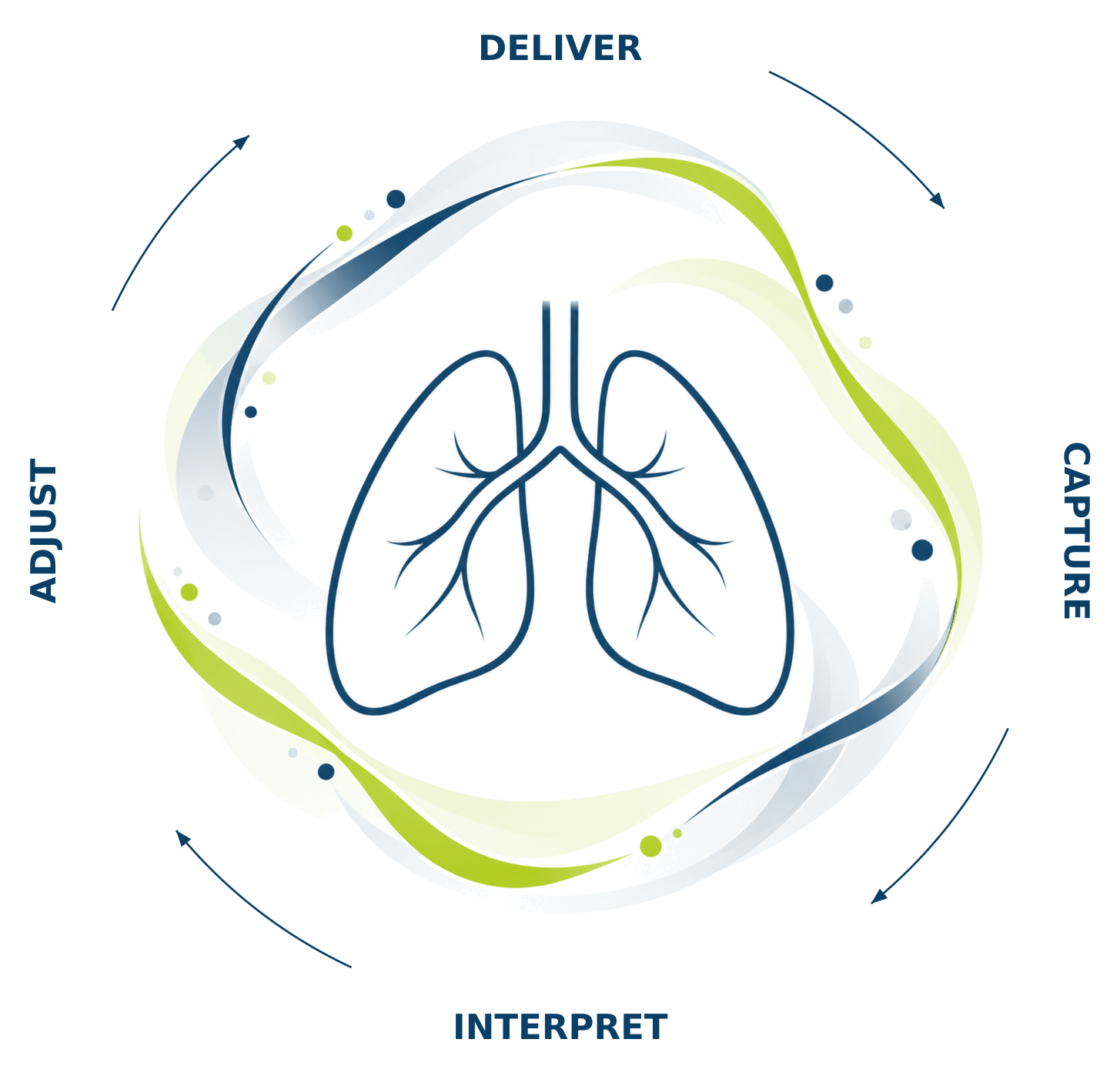
Inbisense is developing an integrated respiratory platform to connect information about inhaler use, airway inflammation, lung function and everyday context. Our initial commercial focus is on pharmaceutical companies, drug developers and contract research organisations. Our wider ambition is to build the evidence for better-informed respiratory care between appointments.
Initial commercial focus
Respiratory studies can generate treatment outcomes without one connected picture of inhaler use, airway inflammation, lung function and the circumstances surrounding them. Inbisense is being developed to bring these signals together over time.
Proposed recording of time-stamped inhaler-use events and information about timing, shaking and orientation, subject to technical validation.
Proposed integration of study-selected measurements such as FeNO and spirometry, depending on the indication and protocol.
Proposed inclusion of patient-reported symptoms, daily functioning and relevant environmental conditions.
Connecting recorded inhaler-use information with respiratory measurements could help study teams interpret findings and investigate treatment response.
Inbisense is seeking pharmaceutical, CRO, clinical and academic partners with research questions, measurement challenges or feasibility opportunities. Device capabilities, integrations and research views will be developed and evaluated around each agreed use case.
The reality of routine care
For many people whose asthma is managed in primary care, the scheduled checkpoint may be an annual review. NICE recommends review at least annually and after an exacerbation.
Control, treatment, inhaler technique and the personalised action plan are reviewed.
Important events may sit across memory, prescription records, separate measurements and acute-care notes rather than one time-based picture.
The story is reconstructed from symptoms, reliever use, prescriptions and any acute events.
People with asthma should receive a primary-care review at least once a year and after an exacerbation.
NICE NG245Clinicians assess reliever use, oral steroid courses, hospital or emergency attendance, and time missed from work or school.
NICE monitoring guidanceWho it affects
The same missing record affects everyone involved. Switch views to compare the gaps that exist today with the intended value of one connected record.
Inhaler-use events, symptoms and respiratory changes may be remembered or recorded separately, leaving patients without one clear history.
The proposed record could bring together inhaler-use events and respiratory change without relying on memory alone. Remote review may also reduce unnecessary travel.
Reviews often combine brief appointments, patient recall, prescription records and disconnected measurements.
A connected record could provide a time-based view of what happened between appointments, supporting better-informed conversations and more focused follow-up.
When inhaler-use information and respiratory measurements sit apart, interpreting trial and real-world findings can be more difficult.
Connecting treatment-use information with respiratory measurements could help researchers interpret study findings and investigate treatment response.
Limited visibility between contacts makes proactive follow-up difficult and can leave services responding after deterioration.
Connected information could help services identify patients who may benefit from review and investigate more focused follow-up pathways.
Exacerbations, travel and time away from work or school create costs beyond the consultation itself.
Fewer avoidable journeys and better-managed respiratory health may reduce time away from work or school and make better use of healthcare resources.
Inbisense is intended to support people across a wide range of backgrounds, abilities and circumstances—including those facing health inequalities, limited health or digital literacy, and barriers to consistent care. Proposed Bluetooth, Wi-Fi and cellular configurations would be subject to technical validation and selected around the patient and use case; for example, a cellular configuration could reduce reliance on a smartphone or the need to pair a device. Inclusive design and involvement from representative patient groups will be important throughout development.
Connected-record benefits are intended benefits of the proposed system. They will require appropriate clinical, technical and economic evaluation.
The proposed Inbisense system
The proposed platform is designed to bring together recorded inhaler-use events, respiratory measurements and everyday context. InbiCloud is intended to organise this information over time, supporting authorised users in reviewing trends and interpreting findings.
Proposed information sources
Proposed recording of time-stamped inhaler-use events and information about timing, shaking and orientation, subject to technical validation.
Proposed integration of measurements such as spirometry and FeNO, depending on the device and respiratory condition.
Proposed inclusion of reported symptoms, daily functioning and relevant conditions such as pollen levels or cold weather.
Intended to organise time-stamped information around one patient.
Proposed views for authorised users
Intended to provide personal history, feedback and reminders based on the patient’s own information.
Intended to show patient-specific trends and flag changes for review, focused follow-up and clinician-led treatment decisions.
Proposed study-specific views would be developed around approved research questions, consent and agreed data requirements.
Controlled access Information is intended to be shown according to patient consent and the user’s authorised role.
Traceable events Each event is intended to retain its time, source and device identity.
Designed to exchange data Support for standards such as HL7 FHIR is proposed and remains subject to technical validation.
Development will be staged around defined research and clinical use cases. Device capabilities, integrations and user views will be subject to appropriate technical, clinical and regulatory evaluation. Treatment decisions remain with the healthcare professional; any future algorithm-led adjustment would require extensive validation.
Work with Inbisense
Inbisense is seeking conversations with clinical and academic collaborators, pharmaceutical and CRO study partners, and research or innovation partners. We are particularly interested in defined research questions, respiratory measurement challenges and feasibility opportunities that could help shape staged development.